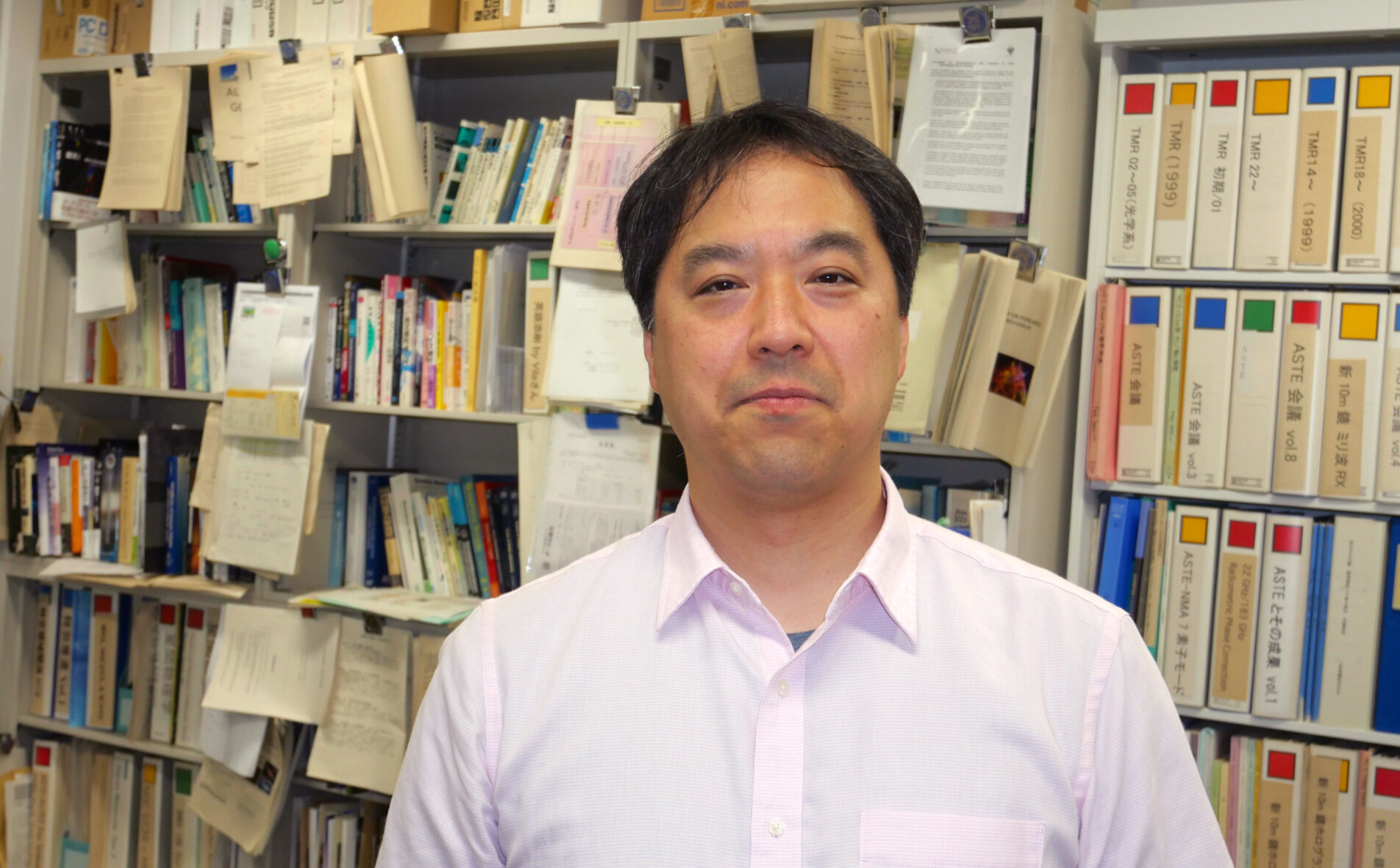
At an altitude of 5,640 meters on Chile’s Atacama Desert — where the atmosphere is so thin that scientists must work with oxygen tanks — an observatory of the University of Tokyo quietly listens to light that has traveled for billions of years from the universe’s first galaxies. This is the University of Tokyo Atacama Observatory (TAO) — the world’s highest astronomical observatory, as recognized by the Guinness World Records. Among the University of Tokyo scientists involved in this remarkable undertaking is Professor Kohno Kotaro.
A Leading Voice in Extragalactic Radio Astronomy
Professor Kohno earned his PhD from the University of Tokyo in 1998, with a dissertation on the observation of dense molecular gas in Seyfert and starburst galaxies using the Nobeyama Millimeter Array. He was promoted to Associate Professor in 2001 and Professor in 2009, and has served as Director of the Institute of Astronomy (IoA) since 2024.
With approximately 700 scientific publications and nearly 15,000 citations, he serves on several specialized commissions of the International Astronomical Union (IAU), spanning fields from high-energy astrophysics to galactic studies and cosmology.
In Pursuit of the Universe’s First Galaxies
The central question of Professor Kohno’s career appears deceptively simple, yet carries profound significance: how did the first galaxies form and evolve in the early universe?
To answer it, his research proceeds along two parallel tracks. On one hand, he conducts detailed studies of individual galaxies using two of the most powerful observational facilities available today — the ALMA array in Chile and the James Webb Space Telescope (JWST). On the other, he leads large-scale surveys in search of the most distant galaxies at millimeter and submillimeter wavelengths.
These investigations employ three sophisticated techniques: gravitational lensing — in which galaxy clusters serve as “cosmic magnifying glasses” to amplify faint signals; cross-identification of radio and optical sources to locate emission origins; and line intensity mapping — a method that observes the collective emission of an entire sky region to study the universe’s large-scale structure.
Professor Kohno has served as Principal Investigator (PI) of several major ALMA surveys, including UDS, ASAGAO (GOODS-S), and the ALMA Lensing Cluster Survey (ALCS) — among the deepest cosmic maps produced to date.
International Scientific Infrastructure: Where Fundamental Knowledge Meets Advanced Technology
Alongside his research, Professor Kohno is actively engaged in developing next-generation instrumentation for future telescopes.
Facilities such as TAO and ALMA are the fruits of international collaboration among Japan, Chile, Europe, and the United States — requiring state-of-the-art optical and infrared sensor technology, remote operation techniques, and the ability to process massive volumes of data.
The history of science shows that many technologies we take for granted today — including digital image sensors, image compression techniques, and large-scale data infrastructure — either originated from or were driven by astronomical research. Fundamental science does not generate economic value immediately, but it serves as the enduring foundation upon which technological progress is built.
From the Atacama Summit to Vietnam
As Vietnam takes its first steps in building its own space ecosystem, Professor Kohno’s experience offers a valuable and practical perspective: how a scientific power like Japan has persistently invested in fundamental science and international cooperation over many decades — reaping the rewards of achievements like TAO today, and paving the way for the space technologies of tomorrow.
GIÁO SƯ, TIẾN SĨ KOHNO KOTARO
Từ “nóc nhà thiên văn” đến những thiên hà đầu tiên
Giáo sư và Giám đốc Viện Thiên văn học (IoA),
Trường Sau đại học Khoa học, Đại học Tokyo
Ở độ cao 5.640 mét trên sa mạc Atacama của Chile — nơi bầu khí quyển mỏng đến mức các nhà khoa học phải làm việc với bình oxy — một đài thiên văn của Đại học Tokyo đang lặng lẽ lắng nghe ánh sáng đã rong ruổi suốt hàng tỷ năm từ những thiên hà đầu tiên của vũ trụ. Đó là Đài thiên văn TAO (University of Tokyo Atacama Observatory) — đài thiên văn cao nhất thế giới được Kỷ lục Guinness công nhận. Và một trong những nhà khoa học Đại học Tokyo gắn bó với công trình ấy là Giáo sư, Tiến sĩ Kohno Kotaro.
Một trong những chuyên gia hàng đầu về thiên văn vô tuyến ngoài thiên hà
Giáo sư Kohno nhận bằng Tiến sĩ tại Đại học Tokyo năm 1998 với luận án về quan sát khí phân tử đậm đặc trong các thiên hà Seyfert và starburst, sử dụng mạng kính Nobeyama Millimeter Array. Ông được phong Phó Giáo sư năm 2001, Giáo sư năm 2009, và từ năm 2024 đảm nhiệm cương vị Giám đốc Viện Thiên văn học (IoA), Đại học Tokyo.
Với khoảng 700 công bố khoa học và gần 15.000 trích dẫn, ông là thành viên nhiều Ủy ban chuyên ngành của Liên đoàn Thiên văn Quốc tế (IAU) — từ vật lý năng lượng cao đến thiên hà học và vũ trụ học.
Truy tìm những thiên hà đầu tiên của vũ trụ
Câu hỏi trung tâm của sự nghiệp Giáo sư Kohno tưởng chừng đơn giản nhưng mang ý nghĩa nền tảng: những thiên hà đầu tiên đã hình thành và tiến hóa như thế nào trong vũ trụ sơ khai?
Để trả lời, ông phát triển nghiên cứu theo hai hướng song song. Một mặt, ông phân tích chi tiết từng thiên hà riêng lẻ bằng hai công cụ quan sát mạnh nhất hiện nay là mạng kính ALMA tại Chile và kính không gian James Webb (JWST). Mặt khác, ông thực hiện các khảo sát quy mô lớn để tìm kiếm những thiên hà xa xôi nhất ở bước sóng milimét và dưới milimét.
Các nghiên cứu này sử dụng ba kỹ thuật tinh vi: thấu kính hấp dẫn — trong đó các cụm thiên hà đóng vai trò như “kính lúp vũ trụ” để khuếch đại tín hiệu; đối chiếu tín hiệu vô tuyến – quang học để nhận diện nguồn phát; và line intensity mapping — phương pháp quan sát tổng thể phát xạ của một vùng không gian để nghiên cứu cấu trúc vũ trụ ở quy mô lớn.
Giáo sư Kohno đã chủ trì (Principal Investigator) nhiều khảo sát lớn trên ALMA, trong đó có UDS, ASAGAO (GOODS-S) và ALMA Lensing Cluster Survey (ALCS) — những bản đồ vũ trụ sâu hàng đầu hiện nay.
Hạ tầng khoa học quốc tế: Nơi tri thức cơ bản gặp công nghệ tiên tiến
Song song với hoạt động nghiên cứu, Giáo sư Kohno tham gia tích cực vào phát triển thiết bị quan sát thế hệ mới cho các kính thiên văn tương lai.
Những công trình như TAO và ALMA là kết quả của hợp tác quốc tế giữa Nhật Bản, Chile, châu Âu và Hoa Kỳ, đòi hỏi công nghệ quang học và cảm biến hồng ngoại tinh vi, kỹ thuật vận hành từ xa cùng năng lực xử lý dữ liệu quy mô lớn.
Lịch sử phát triển khoa học cho thấy nhiều công nghệ quen thuộc ngày nay — như cảm biến ảnh số, kỹ thuật nén ảnh hay hạ tầng xử lý dữ liệu — đều có nguồn gốc hoặc được thúc đẩy từ các nghiên cứu thiên văn. Khoa học cơ bản không tạo ra giá trị kinh tế ngay lập tức, nhưng đóng vai trò nền tảng lâu dài cho sự phát triển công nghệ.
Từ đỉnh Atacama đến Việt Nam
Trong bối cảnh Việt Nam đang từng bước xây dựng hệ sinh thái không gian của riêng mình, kinh nghiệm của Giáo sư Kohno mang lại một góc nhìn thực tiễn: về cách một cường quốc khoa học như Nhật Bản đã kiên trì đầu tư vào khoa học cơ bản và hợp tác quốc tế suốt nhiều thập kỷ — để từ đó gặt hái những thành quả như TAO hôm nay, và mở ra những khả năng công nghệ của ngày mai.
Ở độ cao 5.640 mét trên sa mạc Atacama của Chile – nơi bầu khí quyển mỏng đến mức các nhà khoa học phải làm việc với bình oxy – một đài thiên văn của Đại học Tokyo lặng lẽ lắng nghe ánh sáng đã truyền đi hàng tỷ năm từ các thiên hà đầu tiên của vũ trụ. Đây là Đài quan sát Atacama của Đại học Tokyo (TAO) – đài quan sát thiên văn cao nhất thế giới, được Kỷ lục Guinness Thế giới công nhận. Trong số các nhà khoa học của Đại học Tokyo tham gia vào công việc đáng chú ý này có Giáo sư Kohno Kotaro. Tiếng nói hàng đầu trong lĩnh vực thiên văn vô tuyến ngoài thiên hà Giáo sư Kohno lấy bằng Tiến sĩ tại Đại học Tokyo vào năm 1998, với luận án về quan sát khí phân tử đậm đặc trong các thiên hà Seyfert và các thiên hà bùng nổ sao bằng cách sử dụng Mảng Milimét Nobeyama. Ông được thăng chức Phó Giáo sư năm 2001 và Giáo sư năm 2009, đồng thời giữ chức vụ Giám đốc Viện Thiên văn học (IoA) từ năm 2024. Với khoảng 700 ấn phẩm khoa học và gần 15.000 trích dẫn, ông phục vụ trong một số ủy ban chuyên môn của Liên minh Thiên văn Quốc tế (IAU), trải rộng trên các lĩnh vực từ vật lý thiên văn năng lượng cao đến nghiên cứu thiên hà và vũ trụ học. Theo đuổi các thiên hà đầu tiên của vũ trụ Câu hỏi trọng tâm trong sự nghiệp của Giáo sư Kohno có vẻ đơn giản nhưng lại mang ý nghĩa sâu sắc: các thiên hà đầu tiên hình thành và phát triển như thế nào trong vũ trụ sơ khai? Để trả lời câu hỏi này, nghiên cứu của ông tiến hành theo hai hướng song song. Một mặt, ông tiến hành các nghiên cứu chi tiết về từng thiên hà bằng cách sử dụng hai trong số các phương tiện quan sát mạnh nhất hiện nay – dãy ALMA ở Chile và Kính viễn vọng Không gian James Webb (JWST). Mặt khác, ông dẫn đầu các cuộc khảo sát quy mô lớn để tìm kiếm các thiên hà xa xôi nhất ở bước sóng milimet và dưới milimet. Những cuộc nghiên cứu này sử dụng ba kỹ thuật phức tạp: thấu kính hấp dẫn – trong đó các cụm thiên hà đóng vai trò là “kính lúp vũ trụ” để khuếch đại các tín hiệu yếu; nhận dạng chéo các nguồn vô tuyến và quang học để xác định nguồn phát xạ; và lập bản đồ cường độ đường – một phương pháp quan sát sự phát xạ tập thể của toàn bộ vùng bầu trời để nghiên cứu cấu trúc quy mô lớn của vũ trụ. Giáo sư Kohno đã từng là Điều tra viên chính (PI) của một số khảo sát ALMA lớn, bao gồm UDS, ASAGAO (GOODS-S) và Khảo sát cụm thấu kính ALMA (ALCS) – trong số các bản đồ vũ trụ sâu nhất được tạo ra cho đến nay. Cơ sở hạ tầng khoa học quốc tế: Nơi kiến thức cơ bản kết hợp với công nghệ tiên tiến Bên cạnh nghiên cứu của mình, Giáo sư Kohno còn tích cực tham gia phát triển thiết bị đo thế hệ tiếp theo cho các kính thiên văn trong tương lai. Các cơ sở như TAO và ALMA là thành quả của sự hợp tác quốc tế giữa Nhật Bản, Chile, Châu Âu và Hoa Kỳ – đòi hỏi công nghệ cảm biến quang học và hồng ngoại hiện đại, kỹ thuật vận hành từ xa và khả năng xử lý khối lượng lớn dữ liệu. Lịch sử khoa học cho thấy rằng nhiều công nghệ mà chúng ta ngày nay coi là đương nhiên — bao gồm cảm biến hình ảnh kỹ thuật số, kỹ thuật nén hình ảnh và cơ sở hạ tầng dữ liệu quy mô lớn — đều có nguồn gốc từ hoặc được thúc đẩy bởi nghiên cứu thiên văn. Khoa học cơ bản không tạo ra giá trị kinh tế ngay lập tức nhưng nó đóng vai trò là nền tảng lâu dài để xây dựng tiến bộ công nghệ. Từ Hội nghị thượng đỉnh Atacama đến Việt Nam Khi Việt Nam bước những bước đầu tiên trong việc xây dựng hệ sinh thái không gian của riêng mình, kinh nghiệm của Giáo sư Kohno mang đến một góc nhìn thực tế và có giá trị: một cường quốc khoa học như Nhật Bản đã kiên trì đầu tư vào khoa học cơ bản và hợp tác quốc tế trong nhiều thập kỷ qua như thế nào – gặt hái những thành quả đạt được như TAO ngày nay và mở đường cho các công nghệ vũ trụ của ngày mai.